
Kratom vs Coffee: A Balanced Comparison
An educational comparison of kratom and coffee — two plants from the same botanical family with very different profiles.
Comparison Disclaimer
This comparison is for educational purposes only. It does not constitute a recommendation to use either substance. Do not combine substances without consulting a healthcare professional.
Key Takeaways
- This content is educational — not medical advice
- Individual experiences with kratom vary
- Laws and regulations may vary by region
Kratom and coffee. Two beverages enjoyed by millions worldwide, each offering a unique set of effects. While both are often used to combat fatigue and enhance focus, they achieve these results through different mechanisms and boast distinct profiles. For Canadians seeking to understand the nuances between these two popular choices, this article provides a balanced comparison, exploring their origins, active compounds, effects, and potential drawbacks. This isn't about declaring a winner, but about offering information to help you make informed choices.

Kratom
Kratom, scientifically known as Mitragyna speciosa, is a tropical evergreen tree belonging to the Rubiaceae family, the same coffee family that Coffea (the coffee plant) belongs to. Originating in Southeast Asia, kratom leaves have been used for centuries in traditional medicine for their varied effects. The leaves are typically chewed, brewed into tea, or ground into kratom powder.
The effects of kratom are complex and dose-dependent. At lower doses, it's reportedly associated with increased energy, alertness, and sociability. At higher doses, it's often described as having more relaxation and pain-relieving properties. Kratom contains several active compounds, most notably Mitragynine and 7-hydroxymitragynine, which interact with opioid receptors in the brain, influencing mood, pain perception, and energy levels. It is important to note that the legal status of kratom in Canada can vary by province and territory, so it's essential to check local regulations before purchasing or using it.
Kratom vs Coffee
Comparing kratom and coffee requires understanding their distinct chemical compositions and mechanisms of action. Coffee derives its stimulating effects primarily from Caffeine, a well-known stimulant that affects the central nervous system. Kratom, on the other hand, has a more complex profile, with Mitragynine being its primary active alkaloid. While both can provide a boost in energy, the nature of that energy and the accompanying effects differ significantly. Many people search for kratom vs coffee reddit to see other people's experiences with both.
Kratom and coffee are often compared due to their shared ability to enhance alertness and focus. However, the way they accomplish this is quite different. Caffeine in coffee primarily blocks adenosine receptors, preventing the feeling of tiredness. Kratom interacts with opioid receptors, which can lead to pain relief, mood elevation, and, at lower doses, increased energy. Some users mix kratom and drink coffee together, but this is something to approach with caution, as the combined effects can be unpredictable.
Coffee and Kratom
Coffee is derived from the roasted beans of the coffee plant (Coffea), a shrub belonging to the Rubiaceae family. It is one of the most widely consumed beverages in the world, prized for its stimulating effects. The active compound in coffee is Caffeine, a powerful stimulant that increases alertness, reduces fatigue, and can improve cognitive function.
Coffee works by blocking adenosine receptors in the brain, which are responsible for promoting sleepiness. This allows for increased neuronal activity, leading to heightened alertness and focus. Caffeine also stimulates the release of adrenaline, further contributing to its stimulating effects. Many Canadians rely on coffee to kickstart their day or power through afternoon slumps.
Vs Kratom
The term "vs kratom" is often used to search for alternatives to kratom, or to compare its effects with other substances. In this context, we are exploring coffee vs kratom. The key difference lies in their mechanisms of action. While Caffeine primarily targets adenosine receptors, kratom interacts with opioid receptors. This difference explains the wider range of effects associated with kratom, including pain relief and mood elevation, which are not typically associated with coffee.
Mixing Coffee and Kratom
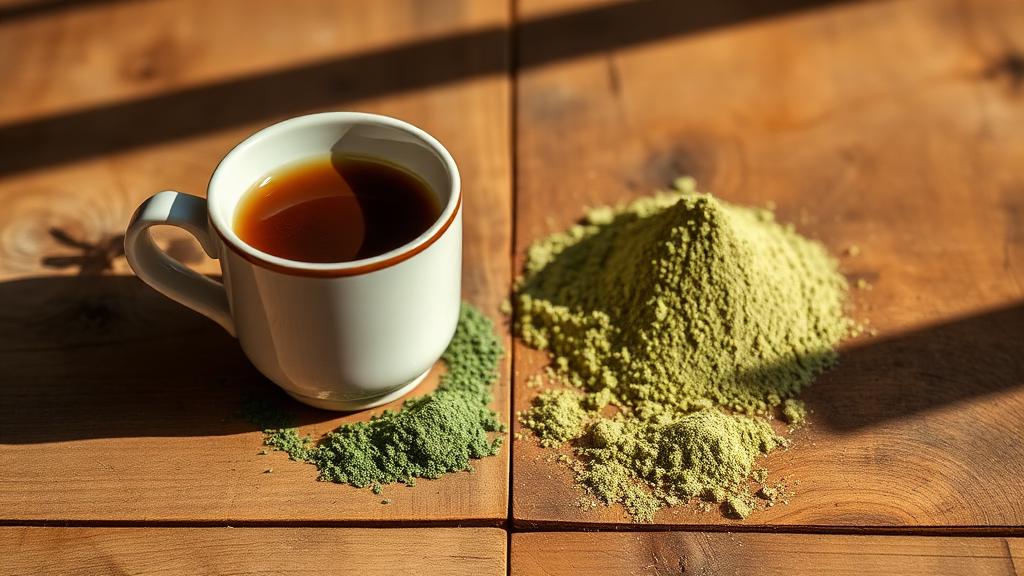
Adding kratom to your coffee or vice versa is a practice some individuals explore, hoping to combine the benefits of kratom and coffee. This is often done by adding kratom powder to a cup of coffee. However, it's crucial to proceed with caution. The combined effects can be unpredictable and potentially overwhelming. Caffeine can amplify the stimulating effects of kratom, possibly leading to anxiety, jitters, or an increased heart rate.
Before mixing coffee and kratom, it's advisable to start with very low doses of both substances to assess individual tolerance. Some users reportedly find that the combination enhances focus and energy, while others experience unpleasant side effects. It's essential to listen to your body and adjust the dosage accordingly. There is limited research on the specific interactions between kratom and Caffeine, so caution and moderation are key.
Kava
Kava is another plant-based substance often compared to kratom. Kava (Piper methysticum) is a plant native to the South Pacific islands, where it has been traditionally used for its relaxing and anxiolytic properties. Like kratom, kava is often consumed as a drink.
Kava vs kratom is a common comparison due to their shared ability to promote relaxation. However, their mechanisms of action differ significantly. Kava primarily affects GABA receptors in the brain, leading to a calming effect. Kratom, on the other hand, interacts with opioid receptors, which can also contribute to relaxation but through a different pathway. While kratom can have stimulating effects at lower doses, kava is generally known for its sedative properties.
Kava vs Kratom
The choice between kava vs kratom depends on the desired effects. If you're looking for relaxation and stress relief, kava may be a better option. If you're seeking energy, focus, and potential pain relief, kratom might be more suitable. Some individuals even use both substances at different times of the day, using kratom for a morning boost and kava for evening relaxation.
It's important to note that both kava and kratom can have potential side effects and should be used responsibly. As with kratom, the legal status of kava can vary, so it's essential to check local regulations before using it in Canada.
Kratom Strain
Kratom strain variety plays a crucial role in determining its effects. Different kratom strain varieties, such as Maeng Da, Bali, and Thai, are associated with different levels of Mitragynine and other alkaloids, leading to variations in their effects. For example, a Maeng Da kratom strain is often associated with increased energy and focus, while a Bali kratom strain is more commonly linked to relaxation and pain relief.
Understanding the different kratom strain varieties can help you choose the right kratom strain for your needs. It's also essential to purchase kratom from reputable vendors to ensure quality and purity.
Benefits of Kratom
The benefits of kratom, according to community discussions, are diverse and can vary depending on the individual and the dosage. Some common benefits of kratom include:
Increased energy* and alertness * Improved focus and concentration * Pain relief * Mood elevation Relaxation* and stress relief
It's important to note that these benefits of kratom are based on anecdotal evidence and traditional use. More research is needed to fully understand the potential benefits of kratom and its long-term effects. It is also important to note that kratom is not approved by Health Canada for any therapeutic purpose.
Kratom Extract
Kratom extract is a concentrated form of kratom, containing a higher concentration of Mitragynine and other alkaloids. Kratom extract is typically more potent than kratom powder or kratom leaves, so it's important to use it with caution.
Kratom extract can be a convenient option for those who want a more potent effect or prefer a smaller dose. However, it's also more likely to cause side effects due to its higher concentration of active compounds. If you're new to kratom, it's best to start with kratom powder or kratom leaves before trying kratom extract.
Frequently Asked Questions
Is kratom similar to caffeine?
While both kratom and Caffeine can provide a boost in energy and alertness, they work through different mechanisms. Caffeine primarily blocks adenosine receptors, while kratom interacts with opioid receptors. This means that kratom can have a wider range of effects than Caffeine, including pain relief and mood elevation. Therefore, kratom is not entirely similar to Caffeine.
Is kratom part of the coffee family?
Yes, kratom (Mitragyna speciosa) belongs to the Rubiaceae family, which is the same coffee family that Coffea (the coffee plant) belongs to.
Why does kratom reportedly make some people feel happy?
Some users say kratom makes them feel happy because it interacts with opioid receptors in the brain, which can influence mood and pain perception. This interaction can lead to the release of endorphins, which can create a sense of well-being and euphoria.
Are kratom and coffee related?
Yes, kratom and coffee are related in that they both belong to the same botanical family, Rubiaceae. However, they have different active compounds and produce different effects.
Is kratom similar to coffee?
While both can provide a boost in energy, kratom and coffee are not entirely similar. Coffee contains Caffeine, a stimulant, while kratom contains alkaloids like Mitragynine that interact with opioid receptors. This leads to different effects.
Summary
Kratom vs coffee presents a choice between two distinct substances, each with its own set of potential benefits and drawbacks. Coffee, with its Caffeine content, offers a familiar and widely accepted stimulant. Kratom, on the other hand, provides a more complex range of effects due to its interaction with opioid receptors. The best choice for you will depend on your individual needs, preferences, and tolerance levels. Remember to research and understand the legal status of kratom in your specific region of Canada before using it, and always prioritize responsible use.
Frequently Asked Questions
Chad Samson
Chad Samson is a Canadian writer who covers the kratom marketplace in Canada — tracking vendors, current pricing, published lab testing, and Health Canada policy. He maintains the vendor comparison data on this site and reviews every guide before it's published.
Reviewed for clarity and educational accuracy.
Get New Kratom Guides & Safety Updates
Join readers who stay informed with our educational content. No spam — just clear, cautious kratom education.
Free Kratom Beginner Checklist included with signup.
Related Guides
What Is Kratom? A Beginner-Friendly Guide
A clear introduction to kratom — what it is, where it comes from, and what you should know.
Kratom vs Tea: An Educational Comparison
How kratom and traditional tea compare as botanical beverages.
Kratom vs Matcha
Comparing kratom and matcha as botanical products.